

There is a great deal of helpful information for you and your puppy on our website . I am constantly adding additional articles. If you have any topics that you would be interested in reading an article about, just give me a shout out. I will do the research and get an article completed.
Puppy Food:
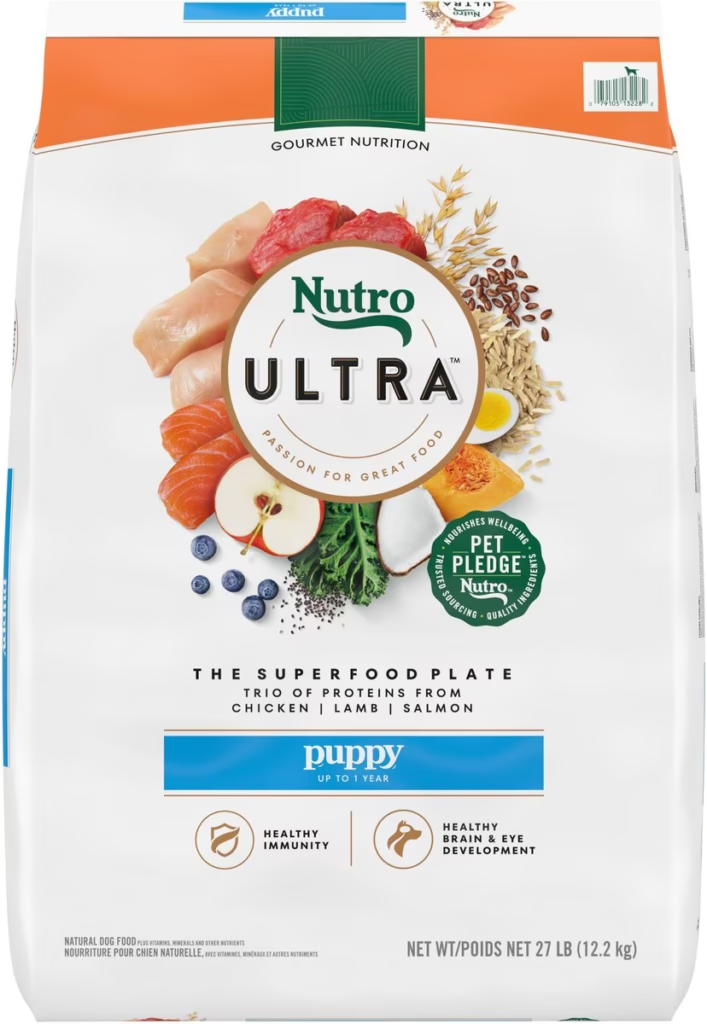
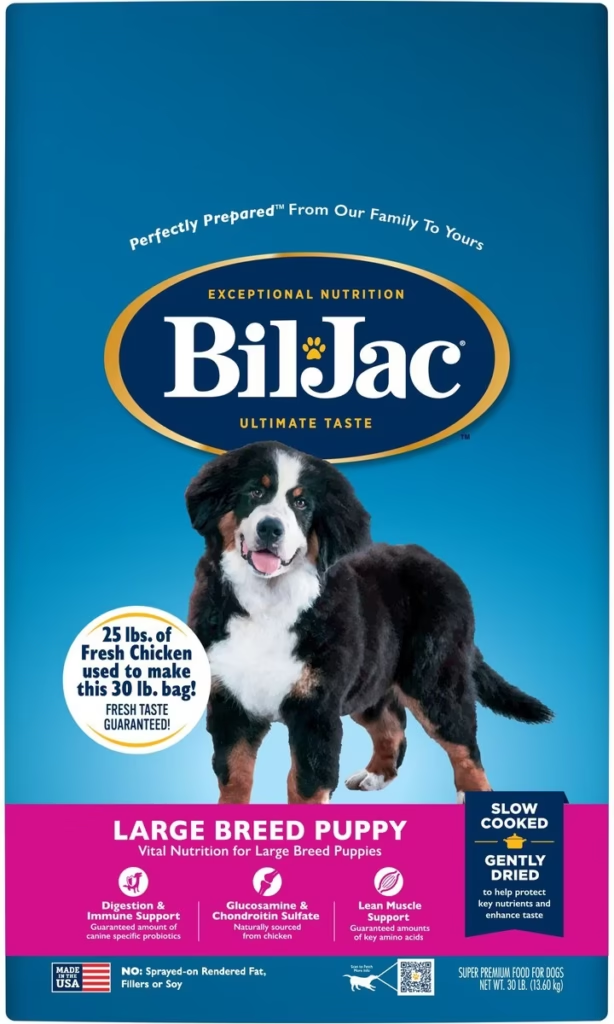
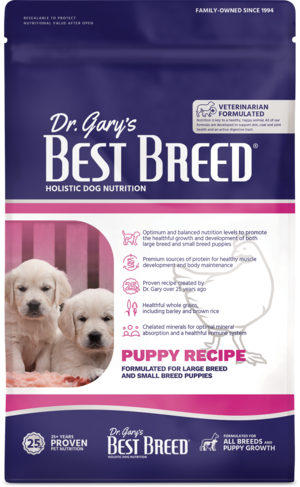
I strongly suggest you read the information on our site about Feeding Your Golden. However, this is the information you will need to know for when you take your baby home. We choose our puppy foods based on current studies and FDA data. If you would like to find out more about the recent diet studies and DCM, you can find the information on our website under Diet and DCM.
Your puppy has been raised on a mixture of hard foods. We do this to provide the puppies with the best start that we can. In addition, we offer canned food once daily.
The foods these pups have been on are:
- Bil Jac Large Breed Puppy – Chicken (Dry)
- Nutro Ultra Large Breed Puppy – Chicken, Lamb, and Salmon (Dry)
- Eukanuba Large Breed Puppy (Dry)
- Dr. Gary’s Puppy (Dry)
- Science diet puppy (Canned)
Until your puppy is 10 to 12 weeks of age, we recommend that he/she continue to get 1/4 to 1/2 can of soft food once a day to make sure that the puppy gets the extra calories necessary for growth. PLEASE choose at least two of the hard foods mentioned above and mix the two foods at a 1:1 ratio. for regular daily feeding.
No Scheduling

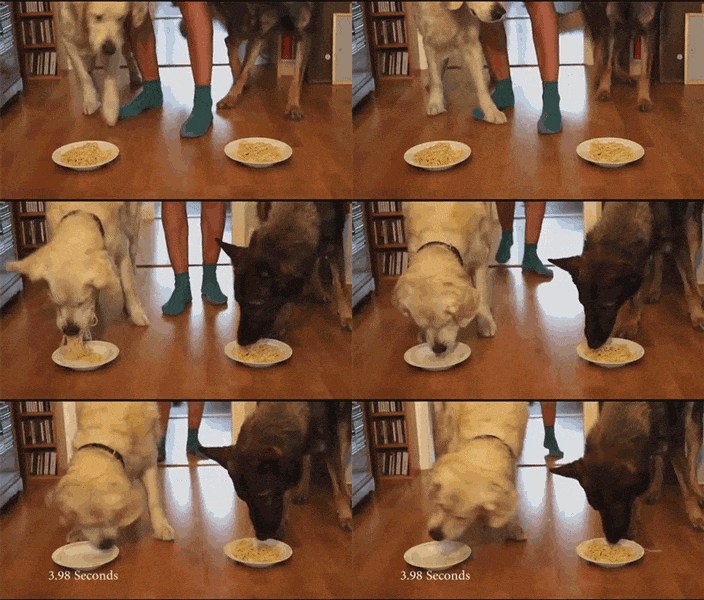
If it is not mandatory that you feed on a schedule, we STRONGLY recommend that you free feed your puppy. This means that the puppy/dog has full access to hard food 24/7. This is better for overall health, digestion, and bloat risk. It also stops your dog from becoming a vacuum cleaner when they eat. The “hoover effect” is caused by scheduled eating.
If it is mandatory that you feed on a schedule, your puppy needs to eat four times a day until 12 weeks of age. At 12 weeks, they can move to three times a day. At 24 weeks, they can start being fed twice a day. When adding soft food during these feedings, separate the can into as many feedings as required in one day.
Canned Food
Give your puppy 1/4 to 1/2 can of soft food once daily to make sure they are getting enough to eat. If you are not feeding on a schedule, do not add the canned food to the hard food as any food not eaten will have to be thrown out so it does not spoil. When you give the canned food, if you chose to order the pre/probiotic supplement, you can add it to the canned food meal as it does not feed well in hard food.
Once your pup is older, you can offer your puppy/dog a one of teaspoon of canned pure pumpkin, one teaspoon of peanut butter, and two tablespoons of oatmeal (uncooked) mixed together as a daily treat to give the supplements. (I premix these and turn them into treat balls to feed my dogs-can be refrigerated for 7 days)
If your puppy’s stool gets soft, change to the sensitive systems canned food. Another helpful additive is powdered pumpkin. Here is a link: Pumpkin powder. Your puppy can be completely on hard food by the time they are 12 – 14 weeks of age.
Changing Puppy’s Diet:
If you decide to change your puppy’s diet, you can do so after the first bags of puppy food you purchased are almost empty (or 12 weeks of age).Once you are close to finishing the first two bags, you will want to purchase one of the previously purchased foods and the food you want to change to. For the health guarantee to stay valid, your puppy must be on one of the foods listed on the approved food list. Once the second bags of food are finished, you can change to only the food(s) you plan to feed. Under no circumstance should you EVER put your Golden on a grain free diet.
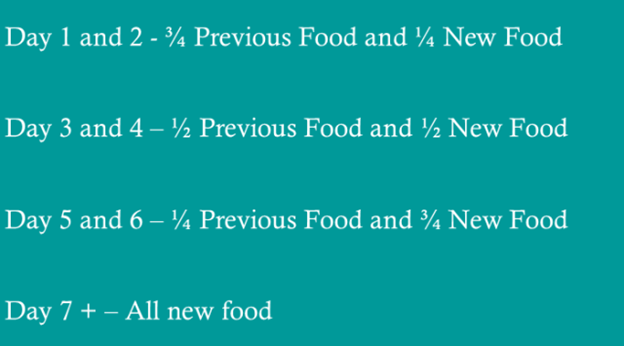
Sudden diet changes can hurt a puppy’s sensitive stomach and result in diarrhea. When it is time to change the puppy’s food, follow this regimen:
In most cases, your puppy will need to be on puppy food for the first 12 to 18 months of life.
A Homecooked Treat
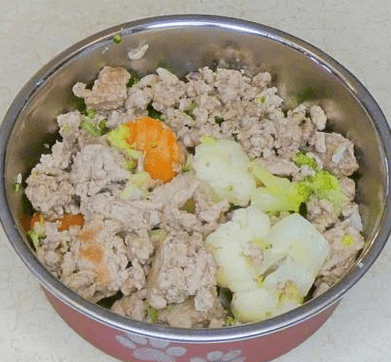
** You are not required to make your puppy homemade food. If you want to for a treat, that is completely up to you. This is not a balance diet and should not be used for the pup’s primary source of nourishment. Use kibble for a balance diet. To do this, you will want to use white or brown rice, mixed veggies (no pea and/or lintel), and meat (or canned dog food in gravy). I change the meal every feeding. The only item that never changes is the rice.
2 Cups of Rice
1 Can or frozen 10 oz bag of veggies (these can be mixed, green beans, pumpkin, carrots, asparagus, broccoli, or cauliflower)
½ lb. of hamburger, ham, salmon, turkey, or chicken (or 2 – 13.2 oz cans of chunks in gravy canned food)
Cook Rice, veggies, and meat (unless it is the canned food)
Mix them all together in a large bowl.
Feed as a treat/supplement or use as a food topper.
Changing Foods (Due to AGE):
At 12 months (if spayed/neutered) or at 18 months of age, your dog will need to be changed to an adult diet. We recommend staying with the same brand as the puppy food you have chosen, just move to an adult diet.
Changing foods due to too much weight gain.
If your dog starts quickly gaining weight after serialization surgery but is still under twelve months of age, it can be beneficial to move to an adult diet earlier to maintain a healthy weight. If your dog is over 12 months, is on adult food, and is still gaining weight too quickly (becoming overweight) you should move your dog to a lower calorie formula OR “weight” diet. All dog food bags should have a Kcal amount on the back. The answer is changing the food, NOT feeding on a schedule.